ServicesEquipment Installation
Loading Dock Equipment Installation in Jeddo, PA
We install dock levelers, vehicle restraints, overhead doors and the parts that tie them together. We measure first, tell you what the pit and wall need, and test every piece with your crew before we leave. You get a dock that works on the first trailer.
What installation covers and when it makes sense
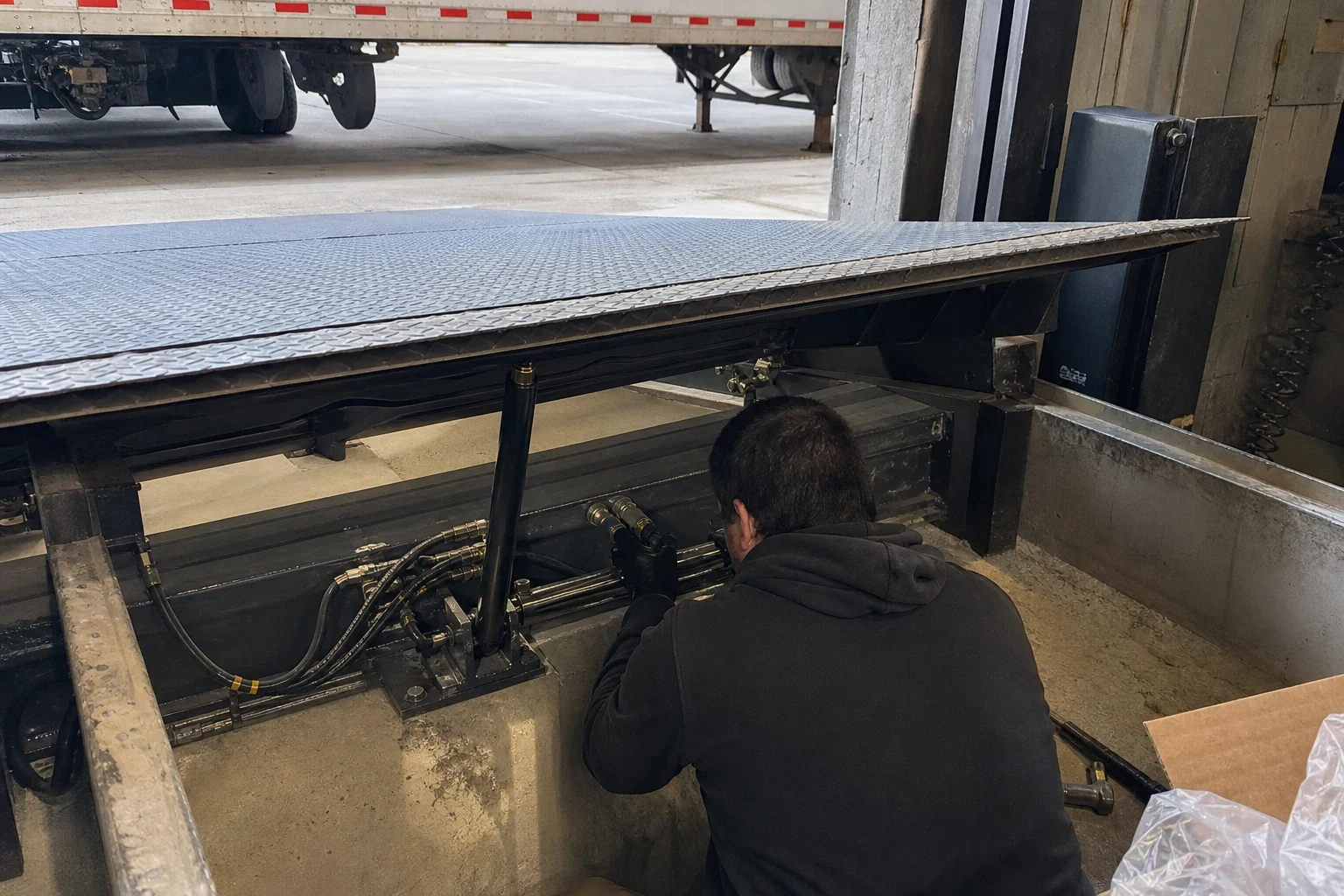
Installation is for new equipment going into a loading dock. That can be a new building, a new dock door cut into an existing wall, or a worn-out leveler or door that no longer makes sense to repair. We set the equipment, anchor or weld it, hook up power and controls, and check that it all works together.
Sometimes repair is the better call. If your leveler frame is sound and the problem is a hydraulic cylinder or a lip hinge, we will say so. Fixes like that belong on our Dock Levelers page or a Loading Dock Preventative Maintenance visit, not a full replacement.
Most of the real work happens before the new unit shows up. Pit concrete that has cracked through years of freeze and thaw, curb angles that have pulled loose, or a door opening that is out of square all need attention first. We find those problems on the site visit so they do not show up on install day.
What we handle on an install
Site check and measurements
We measure pit depth and width, door openings, dock height and the range of trailers you receive. That decides the leveler length and capacity that fit your traffic.
Pit and wall prep
We check curb angles, pit floor and the wall around the door. Loose steel gets re-anchored or replaced. If concrete work is needed, we tell you up front and explain what it involves.
Setting and anchoring
Levelers are set level, shimmed and welded to the curb angles. Vehicle restraints are anchored to the dock face at the right height. Doors are hung square so they track without binding.
Power and controls
We mount control panels and run the equipment wiring, and work with your electrician on the supply side. Where you want it, we set up interlocks so the door, restraint and leveler run in a safe order.
Old equipment removal
If we are replacing a unit, we pull the old one out and haul it away. Your crew does not have to deal with it.
Testing and a walkthrough
We cycle everything under real use and show your operators how the controls work. You get a short rundown on what to watch for between service visits.
Signs it is time for new equipment
Repairs keep stacking up
If the same leveler has been fixed three times this year and the frame is fatigued, new equipment usually costs less over time.
Your trailers have changed
A leveler sized for one trailer height may not reach the reefers or low-bed trucks you get now. Steep grades slow down forklifts and wear out wheels.
No restraint on the dock
Trailer creep and early pull-aways are a real safety risk for forklift drivers. Adding a vehicle restraint is one of the most common installs we do.
Adding or opening a dock door
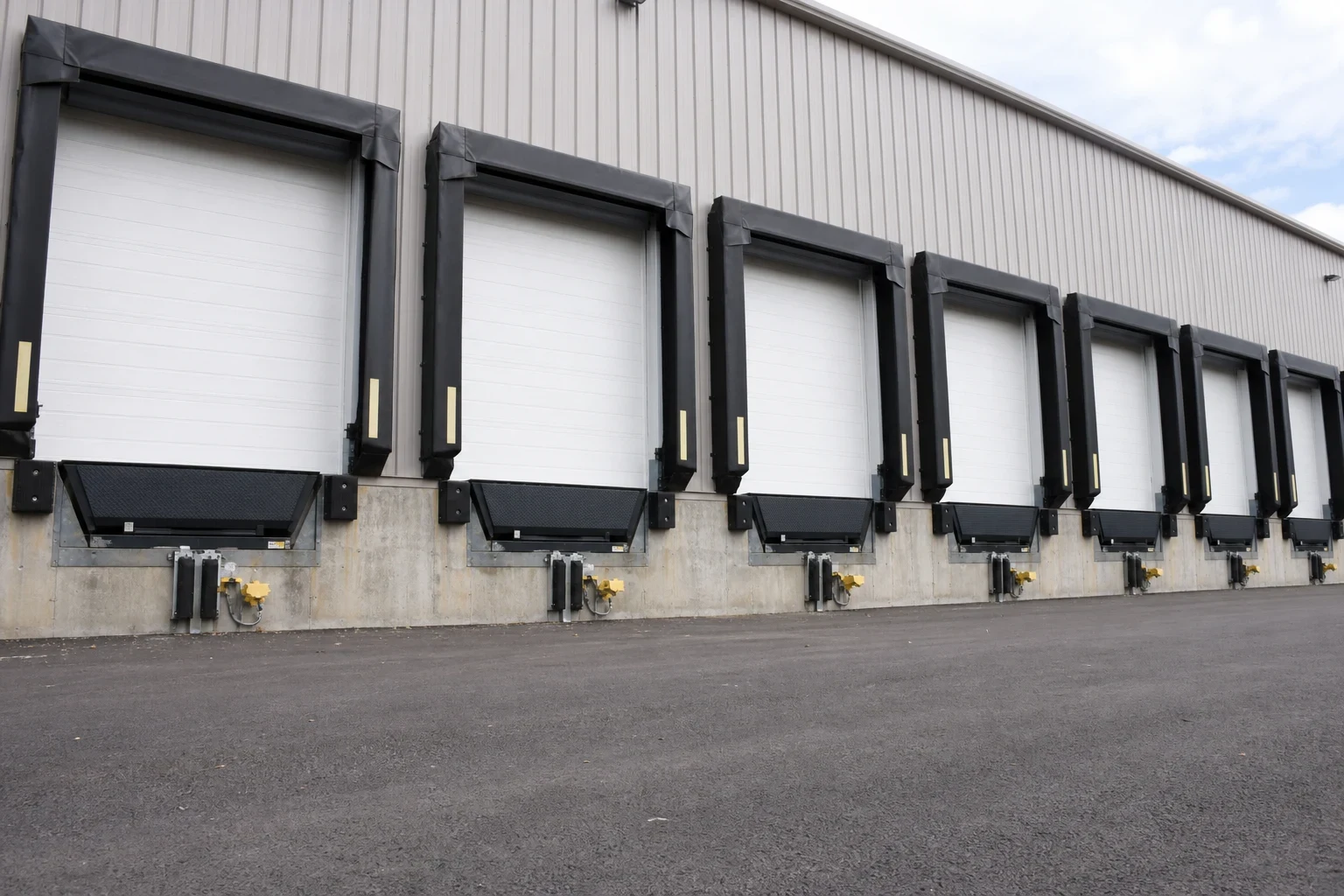
A new bay needs a pit or an edge-of-dock unit, a door and bumpers. Planning them together saves rework.
Moving into a new building
Equipment left by a prior tenant may not suit your loads. We can tell you what to keep and what to swap.
How an install goes
- 1
Site visit
We look at the dock, take measurements and ask about your trucks, loads and shift schedule. You get a straight answer on repair versus replace.
- 2
Written scope
You get a line-by-line scope covering equipment, prep work, removal and power. Anything that might change the cost is named before you agree to it.
- 3
Scheduling around shipping
We plan the work so you can keep other doors running. Most single-door jobs take one door out of service, not the whole dock.
- 4
Install day
We block off the work area, remove old equipment, prep the pit or wall and set the new unit. We clean up the slag, packaging and debris before we go.
- 5
Test and hand over
We run the equipment through full cycles, check interlocks and walk your team through daily use.
What moves the cost of an install
We do not quote a number until we have seen the dock. The equipment itself is only part of the price. Prep work and site conditions often make the bigger difference, so we spell those out in the scope.
- Equipment type and capacity
- A hydraulic pit leveler costs more than a mechanical or edge-of-dock unit. Higher capacity and longer lips add steel and cost.
- Condition of the pit and wall
- Sound concrete and tight curb angles keep the job simple. Cracked pits, broken edges or an out-of-square door opening add labor and materials.
- Power and interlocks
- New circuits and panels, or tying the door, restraint and leveler together, add wiring time and parts.
- Removal and number of doors
- Pulling old equipment adds labor. Doing several doors in one trip usually costs less per door than separate visits.
- Timing
- Work done on nights or weekends to protect your shipping schedule can change the labor cost. We will tell you how much it matters on your job.
Installation questions we hear
Something not covered here? (570) 535-3680
How long will the dock door be out of service?
A straight leveler swap in a good pit often takes about a day. If the pit needs concrete repair, plan for longer because the concrete has to cure. We give you the expected downtime in the scope so you can plan shipments.
Do I need a pit for a dock leveler?
Not always. Edge-of-dock levelers mount to the dock face and work for trailers close to dock height. If you see a wide range of trailer heights, a pit leveler is usually the better fit, and we will explain why for your dock.
Can you install equipment we already bought?
Yes, in most cases. We will check the model against your opening and pit before install day so there are no surprises. If something does not fit, we tell you before we start cutting or welding.
Can we keep shipping while you work?
Usually, yes. We close off only the door we are working on and keep our tools and welding area out of your traffic lanes. If you need every door open during the day, we can talk about off-shift timing.
Do you install restraints and doors along with levelers?
We do. Setting the leveler, vehicle restraint and overhead door together lets us line them up and add interlocks in one job. You can read more on our Vehicle Restraints and Overhead Doors pages.
Planning new dock equipment?
Tell us what you receive and which doors you are thinking about. We will set up a site visit in Jeddo or nearby towns like Hazleton and Freeland and give you a clear scope.