ServicesDock Levelers
Dock Leveler Repair in Jeddo, PA
A leveler that drifts, sticks or slams shuts down a door and slows every truck behind it. We repair hydraulic, mechanical and air-powered dock levelers, tell you what caused the problem, and give you a written estimate before any work starts.
What We Fix and When to Call
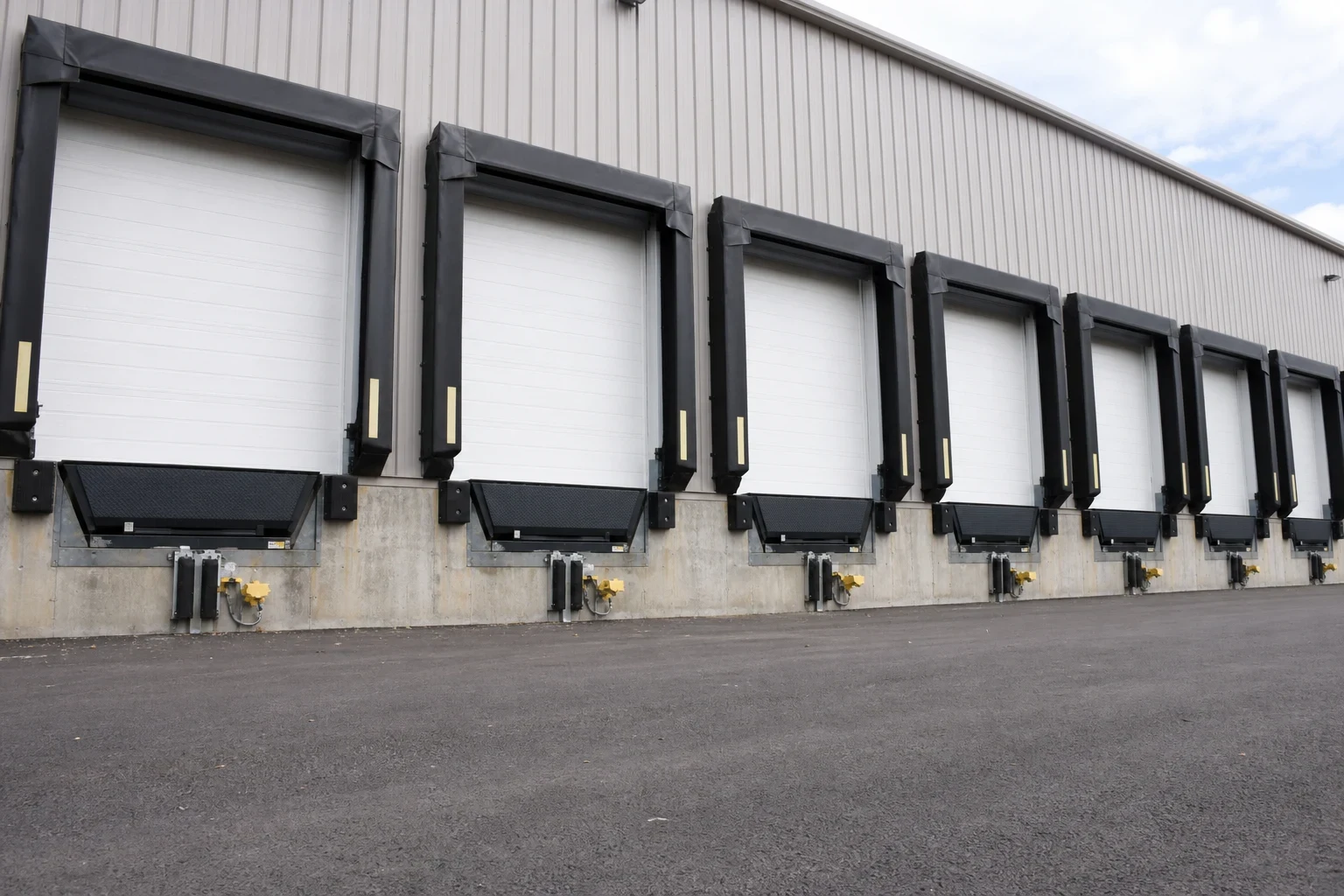
A dock leveler spans the gap, and the height difference, between your dock floor and the bed of a trailer. A working one goes unnoticed. A broken one means forklifts jolt across a gap, drivers sit waiting, and sooner or later someone wedges a pallet under the lip. That is how injuries happen.
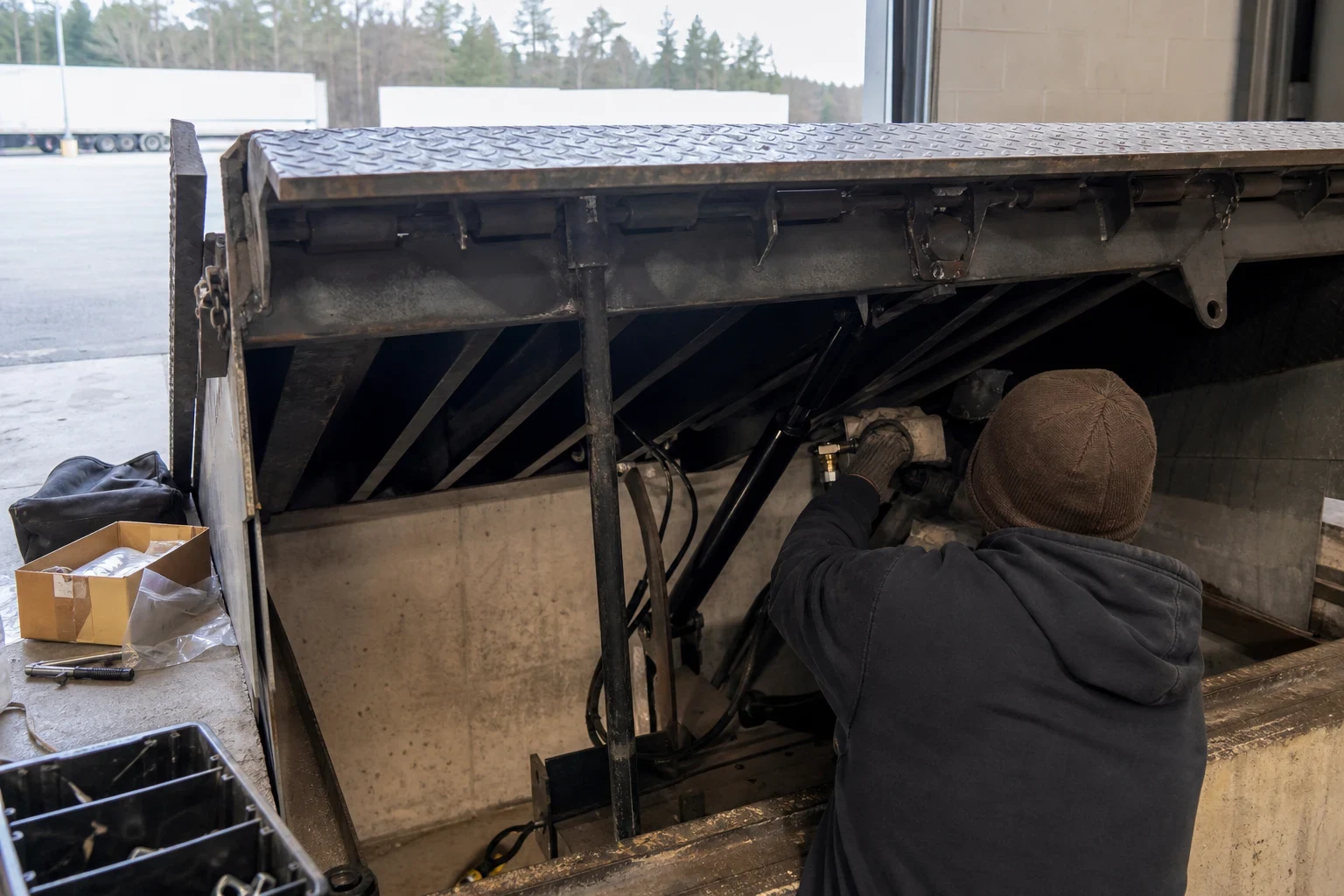
We service all three common designs. Hydraulic units break down at the hoses, cylinders, seals and power unit. Mechanical units give out at the springs, hold-downs and lip linkage. Air-powered units fail at the airbag and blower. Each type wears in its own way, and we'll tell you which problem you have.
Give us a call once a leveler no longer cycles right, or your crew has started working around it. Fixing a hose or spring early runs far less than replacing a bent deck or cracked lip down the road.
What a Leveler Repair Covers
- Hydraulic repairs
- We follow a leak back to the hose, fitting or cylinder seal, replace the bad part, then refill and bleed the system. We also test the velocity fuse, which keeps the deck from dropping freely if a trailer pulls out.
- Springs and linkage
- On mechanical units we swap out broken or weak lift springs, set the spring tension, and fix the hold-down and lip-extension linkage so the deck lifts evenly and the lip locks all the way out.
- Lip and hinge work
- Forklift traffic is hard on lip hinges. We loosen seized hinge pins, replace worn pins and tubes, and fix cracked lip plates or broken welds when the steel is still good.
- Deck and frame check
- We check for cracks in the deck plate, failed welds and bent beams below the deck. If the structure can't be safely repaired, we tell you and go over replacement choices.
- Bumpers, toe guards and pit seals
- Once bumpers wear down, trailers strike the leveler and the wall. We replace worn bumpers, damaged toe guards and the pit-edge weatherseals that block drafts and debris.
Signs Your Dock Leveler Needs Repair
The lip won't fully extend
If the lip hangs short or drops before it reaches the trailer bed, forklifts are rolling onto an edge instead of a full plate. This is usually a hinge, linkage or hydraulic issue.
The deck drifts down or bounces
A deck that slowly sinks while a trailer sits there points to a hydraulic leak or worn seals. Bouncing on a mechanical unit often means a broken spring.
Oil in the pit
Any hydraulic fluid under the leveler means a hose, fitting or cylinder is leaking. It also makes the pit slick for whoever goes down there.
Slow or noisy cycling
Grinding, groaning or a deck that takes much longer to rise than it used to means something is binding or the power unit is struggling. Cold mornings make weak hydraulics show up first.
A hump or dip when forklifts cross
If loads shift or operators slow way down over the leveler, the deck or lip may be bent or a support may be cracked.
What Moves the Cost of a Leveler Repair
Most of the price comes down to which part failed and how much damage it caused on the way out. A replaced hose is a short job. A cracked deck with a bent beam underneath is a different conversation. We price after we've seen it, and the estimate lists each part and the labor.
Leveler type and age
Hydraulic, mechanical and air-powered units use different parts. Older or discontinued models can mean longer waits or adapted parts.
What failed
Seals, hoses and springs are routine. Cylinders, power units and structural welding take more parts and more time.
Secondary damage
A leveler run for months with a weak spring or slow leak often ends up with a bent lip or cracked plate. Catching it early keeps the bill smaller.
Pit and concrete condition
Crumbling pit curbs or broken embedded steel may need attention before the leveler can sit and work right. Freeze-thaw winters tend to show up here.
Scheduling around your operation
Work done between shifts or with doors still running nearby can take longer to stage. We'll plan it with you up front.
How a Leveler Repair Goes
- 1
It starts on the phone
Tell us the type, the make if you have it, and how the leveler is behaving. We'll say what that usually means and book a time that works with your receiving hours.
- 2
Secure it, then inspect
On arrival we raise the deck, set it on its safety prop, and shut off and tag the power so it can't be cycled. Only then does anyone enter the pit. We then work through the hydraulics or springs, lip and hinges, deck and bumpers.
- 3
Photos and a written estimate
You see photos of what we found and get an estimate broken out by line. If a new unit is the better choice, we explain the reason plainly and leave the decision to you.
- 4
Fix it and run it
After the repair we run the leveler through several normal cycles to make sure the deck rises, the lip extends and it all stores flat. Oil and debris come out of the pit before we go.
What Facility Managers Ask About Levelers
Should we repair this leveler or buy a new one?
If the deck, frame and pit are in good shape, a repair is usually money better spent. Replacement makes sense once the steel is bent or cracked, parts are no longer made, or the leveler keeps coming back for work. We'll go over what we saw and give you both options when both are fair choices.
How long will that door be down?
Plenty of hose, seal and spring jobs finish in a single visit. Ordered parts, such as a cylinder or lip plate for an older unit, can keep the door out longer. You'll hear the expected timeline before we begin, so trucks can be sent to other doors.
Can you work on our leveler brand?
Share the make and model when you call, or send a photo of the serial plate if it's readable. We'll tell you honestly whether parts are available and how long they tend to take.
Why is our leveler worse in the winter?
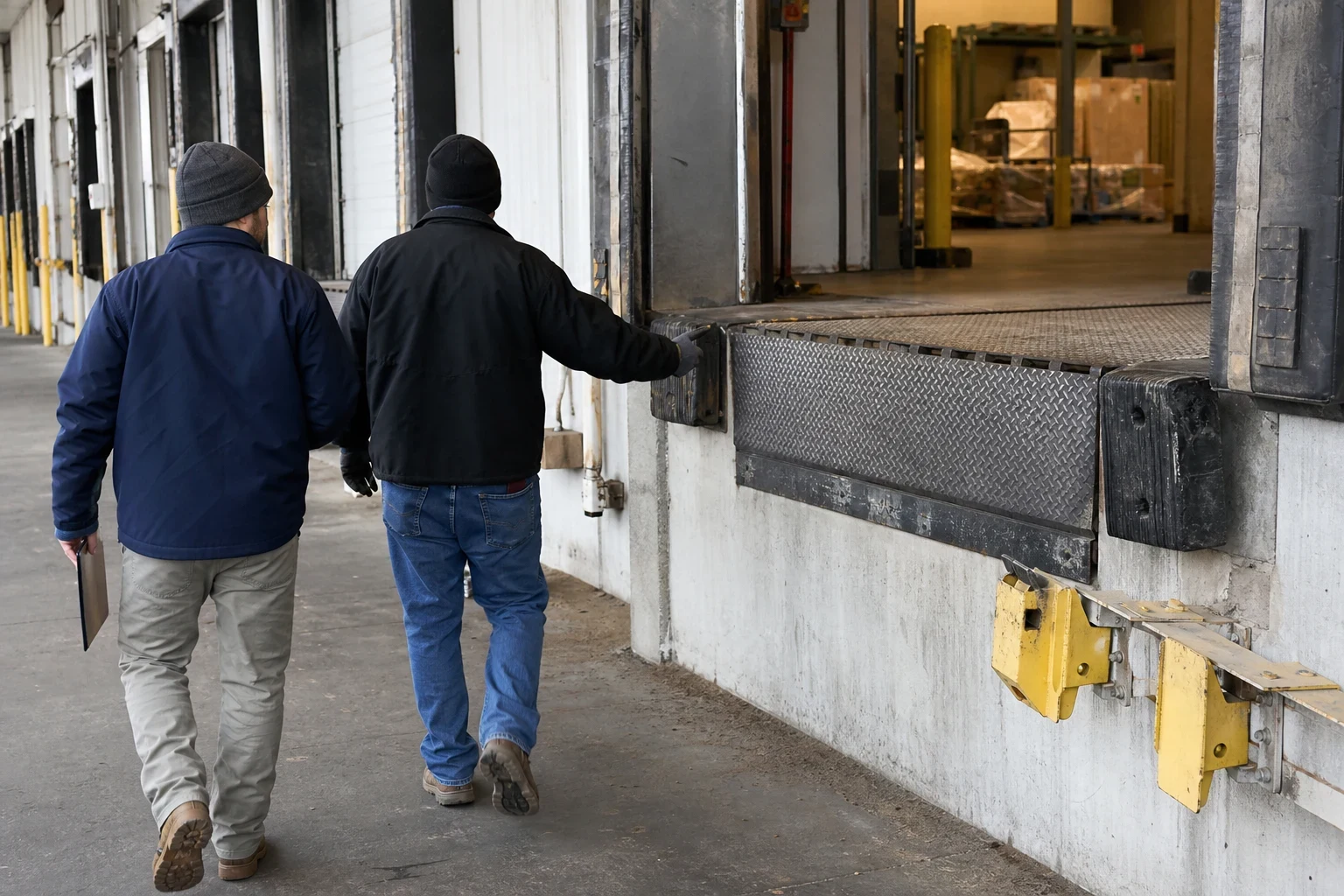
Cold thickens hydraulic fluid, so worn seals or a weak pump show up first on cold mornings. Salt carried in on trailers also eats at hinges and springs over time. Scheduled loading dock preventative maintenance finds both before a door goes out.
Can you put in a vehicle restraint during the leveler job?
Yes. A leveler and a restraint work together at each door, so looking at both on one trip often makes sense. Our vehicle restraints page explains how that work runs.
Get Your Dock Back in Service
Tell us which door, what type of leveler and what it's doing. We'll explain what's likely wrong and set a time to come out and look.